Three Steps for Europe to Become an AI Continent
Europe is not losing the AI race because it lacks talent. It's not losing because of geography, or culture, or even funding — though funding is part of it. It's losing because it keeps writing rules faster than it builds things.
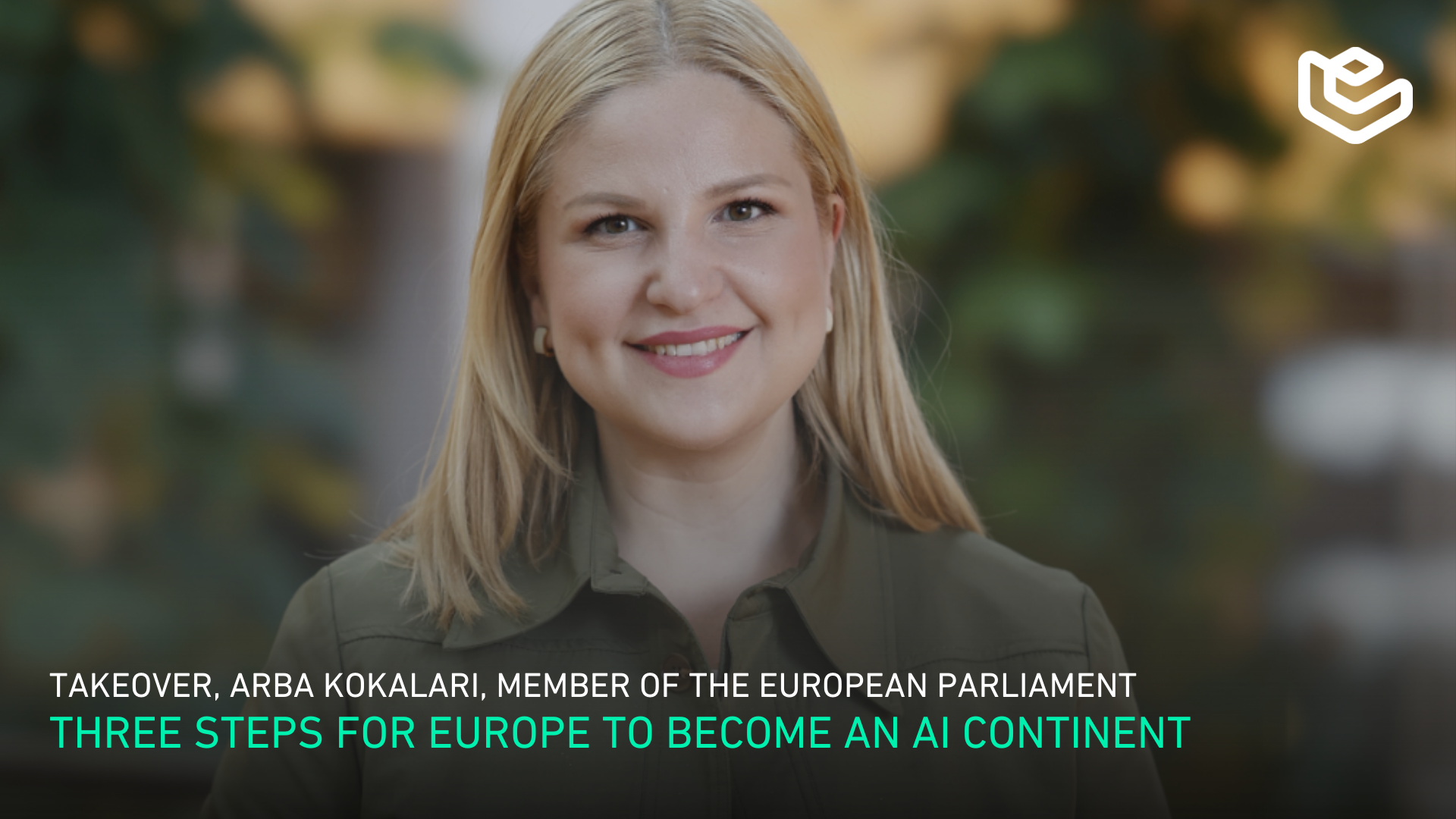
That's the uncomfortable truth sitting underneath Arba Kokalari's contribution to this conversation. As a Member of the European Parliament working directly on AI policy, she's not speaking from the outside. She's inside the machine, and what she's describing is a machine that keeps adding parts without asking whether the whole thing still runs.
The regulatory pile-up is real. The AI Act. GDPR. Overlapping digital legislation that forces companies to hire lawyers where they wanted to hire engineers. This isn't a hypothetical drag on innovation — it's a structural one. And it compounds quietly, in the form of startups that scale elsewhere, researchers who move, and investment that finds friendlier jurisdictions.
Kokalari's three-step framework is deliberately practical. Regulatory simplification — not deregulation, but coherence. Free movement of data, treated with the same seriousness as the free movement of goods. And a genuine commitment to innovation: skills, cross-sector expertise, research investment, and a faster track for the talent Europe needs but keeps making difficult to attract.
None of this is radical. What's radical is how long it's taken to say it clearly at the policy level.
The European Commission has started signalling competitiveness as a priority. That matters. But signals need to become decisions, and decisions need to happen faster than the next regulatory review cycle. The countries and blocs that will set global AI standards in the next decade are the ones making hard calls now — not the ones still mapping overlaps between existing directives.
Europe has a choice. It can be the place that shaped the rules everyone else eventually had to follow — or it can be the cautionary tale about what happens when you regulate a future you never quite believed you'd build.
That choice is still open. Barely.
FAQ
Q: What is Arba Kokalari's main argument in this piece? A: That Europe's regulatory complexity — particularly the overlap between the AI Act and GDPR — is undermining its ability to compete globally in AI, and that simplification, not more legislation, is the priority.
Q: What are the three steps she proposes? A: Regulatory simplification through the EU's Digital Fitness Check, enabling free movement of data across the bloc, and increasing investment in digital skills, research, and tech talent attraction.
Q: Why does data movement matter for AI development? A: AI systems are trained on data. Restricted data sharing doesn't just slow down companies — it limits the quality and scope of what can be built. Free data flows are as foundational to a digital economy as free trade is to a physical one.
Q: Is this about removing all regulation? A: No. Kokalari explicitly calls for clarifying and strengthening existing rules — not scrapping them. The argument is for coherence and reduced administrative burden, not a deregulated free-for-all.
Q: Who should be part of shaping Europe's AI policy direction? A: According to Kokalari, policymakers cannot do it alone. Entrepreneurs, researchers, and the companies actually building AI technologies need to be active participants in that conversation — not just consulted after the fact.